Monday, September 1, 2025

Saint Louis the 9th (IX), King of France, Christian Saint


An excerpt, as reported by Mary Lou Gibson, writer for the Parish of Austin, Texas:

King Louis the IX of France is often looked upon as the model Christian king.  His family and friends often saw examples of his sanctity.  Louis regarded his kingly duties as part of his Christian vocation.  The poorest of the French poor were recipients of the king's charity and alms in whatever city or town he happened to be in.  Twice a week, money, bread, and leftovers from the royal [dinners] were handed out.  He founded a hospital for the destitute and the sight impaired, and established 3 monasteries.

Louis was born at Poissy in 1214, the son of Louis VIII and Blanche of Castile.  After his father died, when Louis was 11, Queen Blanche was declared regent and remained the most important influence in Louis' life.  He was the 9th sovereign of the Capetian dynasty.

He was 19 when he married Margaret of Provence.  They had 11 children, 8 of whom lived to adulthood.  Louis became personally involved in their spiritual training and passed on to them his horror of sin.

He assumed his reign as king in 1226 adn ruled for 44 years until his death in 1270.  Father Clifford Stevens writes in "The One Year Book of Saints" that King Louis is remembered as a fair, wise, and loving monarch who ruled his people with justice and firmness.  He established the crown as the administrator of proper justice especially for the poor and weak.

Louis supported and implemented measures of church reform and founded many ecclesiastical institutions.  He built the church of Sainte-Chapelle at Paris as a shrine for what was believed to be the original crown of thorns.

Louis embarked on 2 crusades, but neither one brought him success.  His first crusade in 1248 was to Egypt where his forces captured the city of Damietta.  But within a year, he was taken prisoner by the Saracens.  Tom Cowan writes in "The Way of the Saints" that he was released with a ransom.

He led another crusade in 1270 to deter muslim advances in Syria.  When King Louis arrived with his fleet in Sardinia, his army was struck with typhus and he and his son died some time after August 25 in Tunis, Algeria.

Under his reign, France enjoyed prosperity and peace within its borders.  Louis was canonized in 127 by Pope Boniface VIII and is the Patron Saint of France.  His feast day is August 25.

Statues of Louis the IX in Saint Louis USA and in New Orleans are copied below.


Sunday, December 15, 2024

Father Stanley Rother, the first American-born martyr to be beatified


December 2017: The Pope formally "beatified" the martyrdom of Father (Priest) Stanley Rother who was from Okarche, Oklahoma.  Beatification is the last step before sainthood although we do not know if he will ever be sainted.


                                    Photo credit: Archdiocese of Oklahoma City archives


Stanley Francis was a priest in the Oklahoma City diocese and volunteered in catholic missions in Guatemala.  In 1968 he served at the parish of Saint James the Apostle (Santiago Apostol) in Santiago Atitlan for the rest of his life.  His parishioners were mostly of Mayan decent.  For 13 years he helped develop a famers coop, a school, a hospital clinic, a radio station, and a nutrition center.  His knowledge of farming appealed immediately to his parishioners who came to adore him.  Father Rother was on of many who helped native peoples who didn't speak spanish begin to get involved in politics, recognize the truth of Christianity, and begin organizing, making themselves present in ways there were not before in the country's politics and control.

The very long civil war (1960-1996) that went through multiple military controlled leaders and early on communist leaders, finally reached this remote community in 1981. The military controlled quasi-totalitarian government was at war with communist guerilla fighters.  A Priest helping the poor and promoting equality was seen as threat to power (someone perceived as promoting discontent).  Father Rother knew he was on a hit list.  A group of armed men entered the rectory on July 28, 1981, and shot him twice in the head, a clear assassination ordered by someone.  Thousands of assassinations occurred, many of them Catholics nuns and priests.  Totalitarian atheist regimes do not like religion (e.g. communist chinese government; communist central American governments) and work to destroy Christianity within their borders.  The islamic countries do the same (e.g. no permits to build new churches; crimes against Christians go unpunished; discrimination in the workplace or in opportunities, etc).

Father Rother succeeded in sharing the christian faith with those in a remote area, helped these people as best he could, a true Christian in words and deeds, a true role model for many of us Christians who do not do a very good job of living the word of God and Jesus.


Saturday, September 23, 2023

The Resurrection was True History

Although i disagree with Frank Turek's perception of evolution theory and long ages, he is adept at talking about the truth of the New Testament as history.  Here is one of his speeches on the truth of the resurrection:

https://www.youtube.com/watch?v=sD4IFp9w5rY


Friday, April 7, 2023

Proof of "God" (creation entity)

 The proof of the existence of a creation entity (or entities) is significant, and much of it can be summarized as follows, with links to discussions at www.creation.com:

  • The universe had a beginning.
  • The universe exists rather than nothing at all.
  • The universe is fine-tuned for life.
  • Morals are real.
  • Living things exhibit ingenious design.
  • Humans are capable of reason.
  • The theory of evolution has been thoroughly debunked.  Some of the evidence is nicely summarized in the book Evolution's Achilles' Heels Link to book ]


  • Wednesday, November 23, 2022

    Was Jesus born on December 25?


    Christ - Mass, or Christmas, = mass of Christ.

    We celebrate the birth of Jesus Christ on December 25.  The Gospels do not reference a birth date, so how was this date discerned by early Christians?  The link below is to an excellent article that provides a summary:

    https://www.biblicalarchaeology.org/daily/biblical-topics/new-testament/how-december-25-became-christmas/comment-page-78/#comment-1328441

    According to written records, Pope Benedict the 16th indicated Christmas (birth of Christ feast) was recognized by Saint Hippolytus of Rome in 204 or 205 AD to be December 25.  Saint Hippolytus wrote "for the 1st advent of our Lord in the flesh, when he was born in Bethlehem, was December 25th, a Wednesday, while Augustus was in his 42nd year, but from Adam, 5500 years."  Hippolytus made no mention of a Roman feast, indicating the Christian use of December 25th was independent of any pagan feast association usurped by Emperor Constantine in the 4th century AD.  

    In Hippolytus' work, "Canon" (235 AD?), the jewish Passover is identified as the conception of Jesus, which would place the birth of Jesus in late fall or early winter in the middle east.  In his work "Chronicon" he places Jesus' birth 9 months after the anniversary of the world's creation.  The date of the creation of the world was recognized as March 25.  Simple math indicates this puts the birth date at December 25.

    Sextus Julius Africanus, born 160 AD and passed 240 AD, who was a Christian historian, in writings in 221 AD noted December 25 as the date of Jesus' birth.  He traveled extensively in Asia, Egypt, and Italy, and was a prefect in Palestine.  His 5 volume history book, Chronographiai (221 AD) calculated a creation date of 5499 BC.  He syncronized history from Egyptian, Chaldaenan, Greek, and Judaic history.  

    Father Irenaeus (130 AD to 202 AD) connected Mary's conception of Jesus with the jewish Passion week staring with Palm Sunday.  Using March 25 as the Passion Week date, 9 months later would be December 25.

    The Catholic / Christian church and Pope Julius the First formalized the birth of Christ to be celebrated on December 25 in 350 AD.  Correspondence between Pope Julius 1 and Jerusalem provides evidence of this decree.  Saint Cyril of Jerusalem did not want to separate the birth and baptism of Jesus into 2 feasts (birth and epiphany).  The Roman Philocalian calendar of 354 AD showed December 25 as the birth feast date.

    The historical written record provides evidence that Cyprus and Armenian and Mesopotamian Christians (Orthodox Church in the eastern Byantine empire) used January 6 at the birth of Christ feast date at the end of the 4th century AD, and Christians in modern day Turkey (now a muslim country) recognized December 25 as the feast for the birth of Christ in 380 or 383 AD in Cappadocia, Turkey.

    In the 1st to 3rd centuries AD Christians mostly celebrated the Easter feast and the Pentecost feast.  In the 4th century, however, the birth and the epiphany were added as feast days.  Feasts for apostles and martyrs also developed in certain regions.  The Virgin Mary was added in the 6th and 7th centuries AD.

    It was common belief or understanding that Jesus Christ was crucified the same calendar day as he was conceived in his mother's womb.  Historical records (e.g. Tertullian) recognized the crucifixion as March 25.  Saint Augustine for example recognized: "for He [Jesus] is believed to have been conceived on the 25th of March, upon which day also he suffered; so the womb of the Virgin, in which he was conceived, where no one of mortals was begotten, corresponds to the new grave in which he was buried, wherein was never man laid, neither before him nor since."  If Jesus was conceived on March 25, then 9 months later corresponds to December 25 !  Saint Ephraim records indicate that the conception of Jesus Christ was on 10 Nisan on the Hebrew calendar, the day in which the passover lamb was selected in the jewish culture.  10 Nisan falls on March 25, the traditional date of the feast of the annunciation (an official holiday in Lebanon by the way).  Sexto Julio Africano wrote in approxmiatley 221 AD that the Annunciation was on March 25.

    The actual term "Christmas" did not develop until 1038 AD, in lieu of the feast of the birth of Christ.

    Roman culture celebrated Saturnalia as a 2-day to 7-day affair on December 17th until changes to the Roman calendar pushed it to Dec. 25.  The festival of Dies Natalis Solis Invicti (birthday of the unconquered sun) was also on Dec 25, a cultish belief that validated "divine" roman emperors to be leaders and that was monetheistic (one creation entity, not many).  While some roman pagans eventually observed December 25 as the birth of their false deity (Saturn, the Roman God of Agriculture) when the great light was at its lowest point of the year (the winter solstice), or the Sun King (sol invicta) it is obvious that the celebration of the birth of Christ around the same time in December by 1st to 3rd century Christians was likely independent of the pagan feast/festival celebrations.  Even if Emperor Constantine intended to replace a pagan festival with Christmas, it would have been to replace the sun God feast, not the winter solstice and Saturn God feast.  After Roman Emperor Constantine ended persecution of Christians and himself became Christian, the Saturnalia feast was still celebrated by pagans independent of Christians well into the 5th century AD.  The Christian calendar of Polemius Silvus written in approximately 449 AD still shows "Saturnalia", separate from the feast of the birth of Christ.  Saturnalia was a popular carnival and feast and was considered fun among the citizens of Rome.

    What evidence is in the gospels?  In the gospel of Luke from the Dead Sea scrolls we learn that Zachariah served as Temple priest in September.  Saint John was therefore conceived in September and born in June.  The Virgin Mary leans of her immaculate conception 6 months after John, e.g. March.  9 months from March is December.

    Dr. David Gwynn, a lecturer in ancient and late antiquity history at Royal Holloway of the University of London indicated after a career researching the topic:

         "The majority of modern scholars would be reluctant to accept any close connection between the          Saturnalia and the emergence of the Christian Christmas".

    The Apostles and disciples and mother Mary in the 1st century AD would know when Jesus was born.  The fathers and mothers of the Christian Church, one would imagine, would communicate the conception (March 25) or birth (Dec 25) dates to everyone.

    Early Christians chose December 25 as the date to celebrate the birth of Jesus because he was both killed and conceived on March 25, and 9 months later would be December 25.  This was done more than 70 years before Romans used that date for their Sun festival or Sol Invictus.  Even if the date is inaccurate, it was the best estimate based on the historical information available to mankind.

    The importance of Christmas is not what day of the year we celebrate the birth of our Lord Jesus Christ, the importance is that we acknowledge His birth as fact and acknowledge that our creation entity sent Jesus to redeem mankind for their sins.

    References:

    - Schmidt, Thomas, Calculating December 25 as the Birth of Jesus in Hippolytus' Canon and Chronicon, Vigiliae Christianae 69 (2015), Yale Religious Studies, New Haven, CT

    Tuesday, August 13, 2019

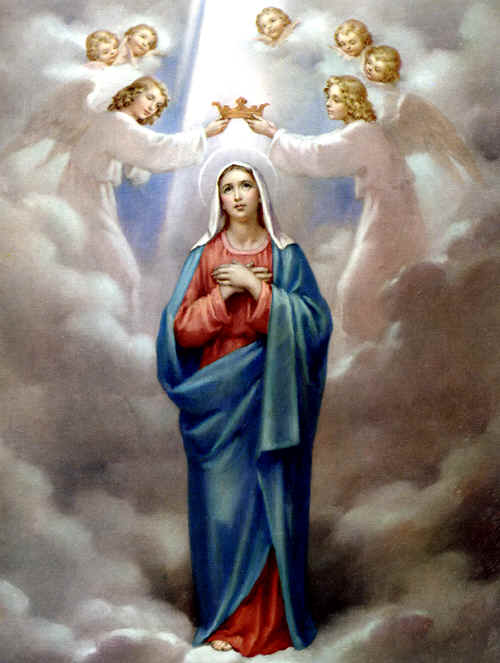
    Assumption of Mary


    The body of Mary was never discovered or kept as holy relic which would have been expected in the 1st century AD.  Her ascension into heaven was recognized based on logical conclusions using this information as well as hints from scripture and historical documents from the 4th century onward.

    The link below is to an article by Dr. Robert Stackpole concerning the evidence for the Assumption of Mary, celebrated every year on August 15 by Christians (i.e. Catholic).

    https://www.thedivinemercy.org/news/The-Case-for-the-Assumption-of-Mary-3691


    Other articles:

    https://timstaples.com/2019/is-the-assumption-of-mary-historical/
    (350 AD documentation by Saint Epiphanius concerning Mary ascension into heaven)

    https://www.catholic.com/magazine/print-edition/how-to-argue-for-marys-assumption

    http://www.unamsanctamcatholicam.com/apologetics/86-contra-protestantism/127-assumption-not-a-question-of-history.html


    Dating the year of her bodily death (63 AD) and assumption to heaven:

    https://churchpop.com/2017/09/10/do-we-know-the-year-of-marys-assumption-heres-the-intriguing-evidence/


    Vatican 1950 Explanation of the Dogma (Set of Principles) to Use:

    http://w2.vatican.va/content/pius-xii/en/apost_constitutions/documents/hf_p-xii_apc_19501101_munificentissimus-deus.html

    Friday, January 25, 2019

    The Wedding Cake: A Symbol of Heterosexual Marriage

    What is the origin of that beautiful typical 3-layered (tiered) white wedding cake that is common to 70% of all weddings in the United States, a predominantly Christian country, but with many atheists and agnostics who also choose to use such a cake?  The cake is not just a food item at the reception.  It is not just edible confection.  It is a work or art, sculpted for the unique bride of the wedding feast, a work of art designed to be viewed, not just served as dessert.  The cake is a central focus of the rituals of the wedding feast.  It is to be viewed because it is a symbol of normal heterosexual fertility, focused on the bride.

    The 3-tiered cake originated in the Victorian era of western civilization.  Queen Victoria of Great Britain in 1840 had a 10-ft wide lower tier cake, 3-tiers, white, topped by an elaborately carved scene of Brittania blessing the Queen and her groom, Prince Albert.  The cake became instantly famous, with paintings of it showing up everywhere.  This cake set the standard for future royal weddings and subsequently weddings for all.  Queen Victoria also broke tradition and wore a white wedding dress.  Also imitated by future generations as we see today.  The white elevated wedding cake was a public display associated with the presentation of the bride in a white dress.  The dress represented virginity and the cake fertility.  The tiered white cake with its cone like form symbolizes the bride in her wedding dress.  The bride was the central focus of the wedding, not the groom (the woman was the focus, not the man).  In the late 1800's and early 1900's the cake was not even called a "wedding cake" it was called the "BRIDES CAKE" !

    Female fertility is symbolized in the cake by the decorations and staging (flowers, swans, almonds).  The ritual cutting of the cake together (bride and groom holding the knife together) symbolizes the sexual bond of the husband and wife.  Without being graphic you can understand the symbolism of the knife cutting into the pristine (virgin) cake.  The Bible tells us man and woman become one flesh in marriage, both in relationship and in the production of offspring (children).  The cake cutting ceremony symbolically expresses the ideal that husbands and wives should have children.  The top of the cake (top tier) is traditionally kept until the couple have their first child.

    The sharing of the cake with family and guests, and the said audience eating the cake, symbolizes acceptance of the marriage and their status as a married couple in society.  Eating the cake is affirmation, it is not just enjoying a tasty treat by an expert baker.

    It is therefore not surprising, and not wrong, for a baker, an artisan, to refuse to create his or her artistic produce for a "gay wedding" if they do not recognize such a ceremony.  Promoting abnormal sexual behavior and promoting a concept that does not exist in Christian, Islamic, Hindu, or Jewish traditions and ideology ("gay wedding"; "polygomous wedding") by making a bride's cake for any ceremony other than a man and a woman getting married under the domain of our Creation Entity is not acceptable to many Americans or simply does not make sense when one understands the history and meaning of the wedding cake (bride's cake).  Producing the artwork known as a bride's cake implies acceptance and celebration of the feast and marriage, and if a baker does not concur, they cannot be forced to participate.  A bride's cake makes no sense at a wedding of 3 lesbians, or 4 men living together as "partners", or 2 men, or 2 women, or a man with his beloved pet dog, etc.

    If "marriage" as historically defined by Christians, Jews, and Hindus involving the permanent relationship between a man and a woman with promises to the creation entity and with a primary goal of raising a family, of committing spouses to each other for reasons other than just feelings and to become responsible adults, why does government (i.e. the states in the USA) continue to recognize marriage at all?  Initially the USA was founded as Christian communities, hence it made sense for local and state governments to recognize marriage and its societal benefits.  The state has an interest in promoting marital norms because it serves the public good by protecting children (statistics prove children raised by a mother and a father fare much better in various characteristics than children of divorced, widowed, or homosexual environments, or fragmented step-family environments) and committing a mother and a father to each other for the long term.  Traditional marriage norms also protect civil society (married couples and their families are statistically more law abiding than other household environments).  Traditional marriage also supports limited government (families that can take care of their own do not need government assistance).  Therefore it is in government's interest to support traditional marriage.  Once the definition of marriage is changed from one of virtue (supporting morals established in scripture), one of responsibility for raising and protecting children, one of commitment between spouses and living a life where you try to discern live according to God's will, to simply a bond between multiple persons based on emotion (feelings), then the institution no longer has positive or constructive meaning and is useless in the wide cultural context. 

    Some argue government should just stop recognizing marriage and leave it to the churches, synagogues, and hindu temples to certify their communities marriages, and dissolve any concept of "secular" marriage, but the impacts to insurance policies and costs, tax rules, property ownership, wills, adoption rules, etc would have to all be considered and new laws and rules implemented (no simple task).  Marriage in secular terms should now simply be better defined as a government recognized "domestic partnership contract", the word marriage should be reserved for those who follow the traditional definition.