Friday, December 16, 2016

English Vocabulary


The ancient biblical texts include parables, allegory, fables, historical documentaries (stories), speeches as literary devices to convey messages, metaphors, similes, analogies, and poems.  It helps to understand different literary forms used by our ancestors as well as understand english vocabulary (terms) so that they are correctly used and understood.


Adage: A short statement expressing a general truth; i.e. "a saying" such as "look before you leap" etc.

Metaphor: A figure of speech where a word or phrase is applied to an OBJECT or ACTION to which it is not literally applicable.  "My brother was boiling mad" is a metaphor for very angry (he was not literally boiling).  When Jesus was recorded saying "I am the light of the world, he who follows me will not walk in darkness but will have the light of life", he is not literally a light, the object "light" can represent guidance for good moral behavior and salvation, and "darkness" represents being lost with regards to not discerning morality or allowing yourself to engage in sinful behavior.

Analogy: A COMPARISON between two things to explain an idea that compares one thing to something that is familiar.  "But now, O Lord, you are our father, we are the clay, and you our potter; and all, we are the work of your hand."  [Isaiah 64:8]  Our creation entity is to us as the potter is to the clay, discerning God's will helps mold and shape us into good human beings.

Wednesday, November 23, 2016

Thanksgiving Day Proclamation by President George Washington 1789

"Whereas it is the duty of all nations to acknowledge the providence of Almighty God, to obey his will, to be grateful for his benefits, and humbly to implore his protection and favor - and whereas both houses of Congress have by their joint committee requested me to recommend to the people of the United States a day of public thanksgiving and prayer to be observed by acknowledging with grateful hearts the many signal favors of Almighty God especially by affording them an opportunity peaceably to establish a form of government for their safety and happiness.

Now therefore I do recommend and assign Thursday the 26th day of November next to be devoted by the people of these states to the service of that great and glorious being, who is the beneficent author of all the good that was, that is, or that will be - that we may then all unite in rendering unto him our sincere and humble thanks - for his kind care and protection of the people of this country previous to their becoming a nation - for the signal and manifold mercies, and the favorable interpositions of his providence which we experienced in the course and conclusion of the late war - for the great degree of tranquility, union, and plenty, which we have since enjoyed - for the peaceable and rational manner, in which we have been enabled to establish constitutions of government for our safety and happiness, and particularly the national one now lately instituted - for the civil and religious liberty with which we are blessed; and the means we have of acquiring and diffusing useful knowledge; and in general for all the great and various favors which he hath been pleased to confer upon us.

And also that we may then unite in most humbly offering our prayers and supplications to the great Lord and ruler of nations and beseech him to pardon our national and other transgressions - to enable us all, whether in public or private stations, to perform our several and relative duties properly and punctually - to render our national government a blessing to all the people, by constantly being a government of wise, just, and constitutional laws, discreetly and faithfully executed and obeyed - to protect and guide all sovereigns and nations (especially such as have shown kindness unto us) and to bless them with good government, peace, and concord - to promote the knowledge and practice of true religion and virtue, and the increase of science among them and us - and generally to grant unto all mankind such a degree of temporal prosperity as he alone knows to be best.

Given under my hand at the City of New York the 3rd day of October in the year of our Lord 1789."

--George Washington, President

Although protestant christian pilgrims did indeed celebrate a day of thanksgiving, it was not a widespread national tradition or holiday obviously until after the formation of the United States.  In 1841 Alexander Young wrote the Chronicles of the Pilgrim Fathers that allowed widespread recognition of the "first thanksgiving" by the pilgrims.  The holiday then developed (became more widespread) and was formalized in 1863 by Abraham Lincoln as a national holiday of giving thanks to God.  The historical events associated with the pilgrims became a popular representation of the thanksgiving feast.

Sample prayers:

"This Thursday is devoted by Christians and citizens of these United States to expressing our humble gratitude to our Creator for providing us the opportunity to experience life and companionship of family and friends, for giving us the opportunity to discover and produce all that we might need, and we pray that we are inspired to determine and exhibit God's will."


Thursday, August 18, 2016

Is there a talking snake in the Bible?

You may have heard arrogant celebrities or activist atheists such as Bill Maher express sarcastic comments towards Christians about believing in a “talking snake”.  There is an active campaign by activist atheists, to insult and belittle Christians in an attempt to characterize the religion as based on nonsense.  To the contrary, it is the activist atheists who expose their ignorance and lack of intellect when making these types of comments, exhibiting a lack of understanding of Old Testament and New Testament literature.  [Note this picture of Mr. Maher is one of the few times I agreed with some of his statements (along with some about Islam).]


The author of Revelations, even back in 81 to 96 AD when it is estimated Revelations was written, uses metaphor and figure-of-speech when he writes “The huge dragon, the ancient serpent, who is called Devil and Satan, who deceived the whole world, […]” [Revelation, 12:9].  Figure-of-speech (or figurative language) is used to call attention to a reality, or truth, or historical fact, it is not used to explain fiction or fantasy.  In other words, figurative language is used to express a truth more impressively (to get attention).  Again in Revelation, 20:2 the writer exclaims “He seized the dragon, the ancient serpent, which is the Devil or Satan, […]”.  The Bible contains many examples of writers using figurative language to associate animals to people because of a shared character or behavioral trait:

John (the Baptist) referred to Jesus Christ as a lamb, [John 1:29]: “Behold the lamb of God who takes away the sin of the world.”

[Revelation 5:5]: Jesus is “the lion of the tribe of Judah”

[Genesis 49:9]: “Judah, like a lion’s whelp, […]”

[Genesis 49:17]: “Let Dan be a serpent by the roadside, a horned viper by the path […]”

[2 Timothy 4:17]: “And I was rescued from the lion’s mouth.” [the lion being Nero]

[Luke 13:32]: “Go and tell that fox […]” [the fox being Herod]

In Hebrew the term for serpent can also mean “a shining one”, “fiery serpent”, or “to enchant”, among other meanings.  2 Corinthians 11:2 makes reference to the “serpent”, and in 11:13 and 11:14 when referring to false apostles notes “even Satan masquerades as an angle of light” (i.e. the shining one).  Ezekiel 28:12-13 refers to Satan as being the king of Tyre and identifies his presence in the garden of Eden: “In Eden, the garden of God, you were, […]”.

We cannot believe the first woman, the only “created” woman, would converse with a literal snake or be fascinated and charmed into changing her behavior by a lower life form.  An angel of light, however, possessing charm and supernatural power could easily entice and deceive Eve into bad behavior.  

Therefore since Satan is sneaky and deceiving like a snake (“serpent”), and as dangerous and destructive as a dinosaur (“dragon”), these animals were used to describe him.

Verses 14 and 15 in Genesis 3 tend to confuse the matter since the physical traits of a snake are identified.  “On your belly shall you crawl, and dirt shall you eat” figuratively means having to resort to deceitful unclean (unethical, immoral) behavior or enticement of such behavior, and possibly humiliation at having to do so after having been a glorious angel before being banned by God.


Hypocatastasis is a figure of speech that implies a representation or comparison.  Unlike a metaphor that spells out both elements, hypocatastasis only mentions one and implies the second.  The “serpent” in Genesis [3] is not a “talking snake”, it is the fallen angel known as Satan.


Thursday, July 28, 2016

Who wrote the Bible ?


The bible, from the latin and greek word “biblia” means books.  It is a library of short books (or anthology = collection of writings).  The bible is composed of the “Old Testament” (“jewish bible”) and the “New Testament” (basis of Christianity).


What is a “testament”?  In the ancient use of the word it meant covenant.  As in a contract or pact or agreement or understanding between our creation entity (“God”) and his creation (people).  The New Testament is the new covenant brought about by the appearance of Jesus Christ, which supplements the original covenant.

The Old Testament used by Catholics is composed of 46 books (Protestants use an Old Testament with 39 books).  Written over the course of approximately 600
years (1,000 BC to 400 BC), primarily in Hebrew, the Old Testament includes topics such as law, philosophy, history, words of wisdom, and poetry.  The jewish bible is also known as the “Tanakh”, an acronym for the 3 category divisions of the Old Testament:

Torah (Law)
Nevi’im (Prophets)
Kethuvim (Writings)

The 39 or 46 books of the Old Testament describe the traditions, laws, and history of the Jewish people.  The “Torah” (Genesis, Exodus, Leviticus, Numbers, Deuteronomy) appears to have been written by several authors (5?) who compiled divinely inspired oral traditions and written traditions.  The Torah includes the famous 10 Commandments that Moses was divinely inspired to write.  The books in Prophets and Writings were written by different people at different times.


The Old Testament was not available as a single collection to the common man before the death of Jesus since books did not exist.  Writings were made on scrolls (papyrus or leather) and maintained by rabbis or other religious leaders.  The discovery of the “Dead Sea Scrolls” after 1947 and subsequent dating revealed that the scrolls were produced between roughly 300 years before Jesus Christ up to within the time of Jesus.  The scrolls, from clay pots in caves in the area of Qumran in Egypt, include portions of every book in the Old Testament (except the book of Esther).  The scrolls were written in Hebrew and Aramaic (the Syrian language spoken by Jesus and the community at the time).  The process of writing the books of the Old Testament arguably started in approximately 1,000 BC, with oral tradition before that passing down the information.  The official Jewish bible appears to have been finally compiled by 90 AD.  When the jewish diaspora (dispersion) occurred into the greek speaking world, Hebrew and Aramaic became less popular and holy scrolls began to be translated into greek (i.e. 250 BC).  The greek translation is known as the “Septuagint” which is the most popular translation used by Catholics.

After the amazing life of Jesus Christ as eye-witnessed by countless individuals, Christianity was born.  Starting with the eyewitnesses to Jesus’ experience, his appointed Apostles, and his disciples, information (tradition) was passed on verbally initially but recorded in writing relatively quickly during the first century AD.

The collection of writings that make up the “New Testament” include:

·         the 4 gospels,
·         the Acts of the Apostles,
·         21 letters attributed to (based on information obtained from) Paul, James, Peter, John, and Jude,
·         the Book of Revelation.

27 books in all in the New Testament.  These form the “canon” (rules) that are the authority of Christianity.

“Gospel” was derived and translated from a greek word meaning “good news”.  There is one overall gospel of Jesus Christ (the good news of Jesus Christ).

“The gospel according to Matthew” was written by an unknown author who appears to have attributed the book to the disciple Matthew because Matthew was responsible for some of the traditions (information) passed on verbally.  The gospel appears to have been written a short time after 70 AD (i.e. 70 to 80 AD).  Jesus was crucified and departed (resurrected) in 30 to 33 AD.

“The gospel according to Mark” is likely the first to have been written, in approximately 70 AD.  The book has been attributed to John Mark, cousin of Barnabas, and companion to Apostle Paul on a missionary journey, and an interpreter for Peter.

“The gospel according to Luke” has been attributed to a writer from 80 to 90 AD named Luke, a second generation Christian from Antioch (north of the holy land in modern day Turkey).  This gospel was written by a non-palestinian for a non-palestinian audience of gentiles (non-jews).

“The gospel according to John” appears to have been written by 1 or 2 individuals in 90 to 100 AD, but is attributed to the Apostle John because his verbal traditions may have formed the basis of much of this gospel information.

The “Acts of the Apostles” is really the second part of the book of Luke.  It focuses on the apostles Peter and Paul and their evangelism efforts.

The "letters" (a.k.a. epistles) were to churches and individuals in the Roman world, and are the first written documents of the early church.  13 of the “letters” are by the Apostle Paul or his immediate disciples and are the oldest writings in the New Testament (written between 50 and 60 AD).

“Revelation” uses extravagant symbolism and figurative language to convey messages about the faith.  Symbolic language was popular in 200 BC to 200 AD.  It encourages Christians to remain steadfast against challenges.  It is suspected that the book was written in 81 to 96 AD, the author “John” a prisoner on the island of Patmos (greek island in roman empire), imprisoned for being a Christian in the current Roman empire.  The author may have been a disciple of John the apostle based on the authority of the language and the focus on Asia.  The book of revelation includes a vision of the apocalypse (i.e. the 4 horsemen metaphor for the 4 phases of our destruction, etc).

Today there is more information to support the Bible than ever.  New ancient manuscripts are discovered periodically, adding to the historical accuracy.  Ancient manuscripts confirm that the text of the scripture has been copied reliably.  There are nearly 6,000 handwritten manuscripts of the New Testament written in greek.  Scribes copied ancient texts on papyrus and medieval parchment.  There are over 10,000 ancient manuscripts in Old Latin.  There are over 5,000 ancient manuscripts in other languages.  Put together, there is an enormous body of evidence that the original biblical texts were copied accurately and consistently.  Yes there are subtle variations in the 140,000 words in the New Testament in the translations, "but 99% of the variants do not change the meaning of the text, they are misspellings or differences in word order." [Gary Bates + Lita Cosner, CMI].


Tuesday, May 3, 2016

Abortion


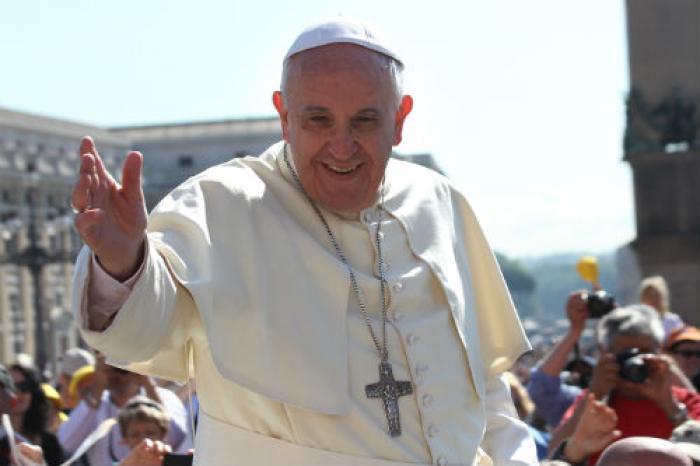
The official position of the Catholic Church (the traditional or original Christian church) is to oppose abortion (in particular the murder of a healthy baby inside the womb).  As clearly stated by Pope Francis:

"So great is the value of human life, and so inalienable the right to life of an innocent child growing in the mother's womb, that no alleged right to one's own body can justify a decision to terminate (kill) that life, which is an end in itself and which can never be considered the property of another human being."

Photo courtesy of Reuters.


The Didache ("didache ton dodeka apostolon" or "Doctrine of the 12 Apostles"), written soon after the crucifixion of Jesus Christ, likely within 65 AD to 80 AD, by uncertain authors associated with the early Christian church, includes the following admonition:

"[...] thou shalt not procure abortion, nor commit infanticide;"


The Didache represents the first catechism (instructions) of the founding church era.  Original scrolls were lost but a Greek manuscript probably written in 1056 AD was discovered in 1873 in a monastery in Constantinople (before muslim occupation, it is now called Istanbul by the muslim community, a derivative of "Islambol" which means "Islam abounds").  Among the manuscripts was a copy of the Didache.  Many references to the Didache are made in ancient Christian literature and other historical writings, including Bishop Saint Irenaeus of Lyons who was martyred in 202 AD.  Some scholars associate the Didache with the council of the Apostles (Saints Paul, Barnabas-Joseph, James) writing this early manual of catechism instruction.


To learn about the Catholic church in the United States, visit:

http://www.usccb.org/beliefs-and-teachings/index.cfm

To learn more about the positions on abortion please visit:

http://www.usccb.org/issues-and-action/human-life-and-dignity/abortion/index.cfm#church


Sunday, March 27, 2016

Coptic Christians in Egypt


"The Coptic Winter "

A report on the persecution of Egypt’s Christians

BY SAMUEL TADROS for National Review magazine

January 2012

One of the powerful images that came to define the Arab Spring was that of Christians and Muslims praying together in Tahrir Square in Cairo. That image helped shape the understanding of what was being portrayed as a liberal and secular uprising, one that stood in dramatic contrast to the region’s eternal dichotomy of politics as a choice between the authoritarian regimes and the Islamists. As Hosni Mubarak was leaving the presidential palace for the last time, the conventional wisdom echoed from the pulpits of academia and the offices of the Obama administration was that Egypt was beginning a long-overdue transition to democracy and becoming a free society.

The myths associated with the Arab Spring are numerous, but none is perhaps more fatal than the quite modern debasement of the concept of a free society to mean, essentially, the holding of elections. The ballot box is perceived as a magical solution, from which freedom of speech, free enterprise, and religious freedom necessarily follow.

The recent massacre of Coptic Christians in Cairo is a stark reminder of the falsity of this view. After years of discrimination and attacks, culminating in the Alexandria church bombing last New Year’s Eve, the Copts, while greeting the revolution with skepticism, maintained some hope that it might improve their plight. Instead, the revolution has only worsened it. Isolated and ignored by the West, the Copts can only wonder today whether, after 2,000 years, the time has come for them to pack their belongings and leave, as Egypt looks less hospitable to them than ever. Like the Jewish communities scattered in Europe during the Middle Ages, the Copts are realizing the eternal lesson of minorities’ survival: Better the persecuting ruler than the mob. A ruler can be bought off or constrained by international pressure; with a mob there are no constraints.

The recent wave of violence against Copts has to be viewed and understood as part of a continuing pattern. Copts have faced three distinct threats: from Islamists, from the government, and from the general population. In the 1980s and 1990s, the Islamists posed the greatest threat: As part of their insurgency against the government in southern Egypt, they often attacked Copts. The threat was so grave in the south that many Copts sought refuge in Cairo.

The government itself engaged in rampant discrimination. Ottoman-era laws restricting the building of churches remain in force. There are no Christian school headmasters or university deans in the public schools. Egypt’s Christian heritage is not mentioned in schoolbooks, and Copts are almost completely absent from the political landscape. Attacks against Copts almost always go unpunished.

Most worrisome of all, in recent years, has been the spate of attacks by ordinary Muslims on their Christian neighbors. Starting with the massacre in el-Kosheh in January 2000, recent attacks usually have not been orchestrated by Islamist groups, but have been the result of ordinary Muslims’ anger at something they see as an affront to Islam’s domination: the resumption of work on an old church, the building of a new one, a rumor of a sexual relationship between a Christian man and a Muslim woman, or a report of a suspected lack of respect for Islam shown by a Christian. The incident usually involves a Muslim mob’s attacking Christian homes and shops, ransacking, burning, and, in some cases, killing.

The Mubarak government’s reaction to such attacks only encouraged further attacks. The police never arrived in time to stop the violence, and when they did, they usually simply arrested a couple of dozen local residents, Christians and Muslims alike. The arrested Christians would serve as a bargaining chip that the government would use to force the church to keep quiet. Faced with possible harsh sentences for their people, the clergy felt that their hands were tied. They were made to participate in government-organized reconciliation sessions that gathered local Christian and Muslim clergymen and other notables, the result of which was to force the Christians to drop all charges. These gatherings would also, usually, pass some sentence on the Christian community for its apparent affront — e.g., the family of a Christian man rumored to be involved sexually with a Muslim woman might be forced to emigrate from the village and pay compensation, or the Copts might be forced to abandon building a church and instead conduct their worship in an unmarked house.

After the revolution, these patterns were reinforced, and indeed attacks on Christians increased substantially. These new attacks involved the same three responsible parties. Islamists, freed from any restraining check of the police, are now free to enforce their vision on Egyptian society at large and Copts in particular. This enforcement takes the shape both of planned attacks led by Salafis and joined by the local mob, such as the May attacks on churches in the Imbaba neighborhood of Cairo, and of daily persecutions that get very little coverage in the Western press. Increasingly, Copts living in poorer neighborhoods find themselves forced to abide by certain Islamic practices or face possible punishment. In some cases, Christian girls in government schools are made to wear the hijab by the Islamist headmasters, who are now free from government control. In a very disturbing incident in October, a 17-year-old Christian student was asked by his teacher to remove the cross that he was wearing around his neck. When he refused, the teacher beat him; his Muslim classmates joined in the beating, which resulted in his death.

The government, meanwhile, evinces a continued lack of interest in protecting Christians. The solution of the Supreme Council of the Armed Forces to the burning of a church in Atfih in March was to invite Salafi preacher Mohamed Hassan to try to cool down the local Muslims. Appearing on national TV later, however, he explained that the attack was not sectarian, but was driven by the discovery of black magic conducted in the church. No attackers were ever punished. After an attack on a church in Aswan on September 30, the local governor actually encouraged the attackers: He declared on TV that the Christians were to blame for a building violation and that “our boys” had corrected the wrongdoing. When the pressure for action becomes high, the government resorts to the old tactic of arresting Christians: Following the recent attack at Cairo’s Maspero building that left some 25 Christians dead, the government arrested a number of young Christians and accused them of killing their coreligionists. Criminal proceedings were also initiated against two priests, Fr. Mittias Nasr and Fr. Philopatear Gamil, who had helped organize local Christians to demonstrate peacefully for their rights. Father Gamil is now in hiding.

For Christians in Egypt, the participation of the general Muslim population in these attacks is the greatest threat to their future. It is not that their neighbors want them dead; they just want the Christians to live, permanently, as second-class citizens. Any attempt by the Copts to break the chains of dhimmitude and act as equals is seen as an affront to the supremacy of Islam in its own land. What fueled the attack on the Aswan church, for example, was not that Christians wanted to pray; they can do so, as long as the building in which they do so is not a church. The local Muslims’ demands were that the building have no bells, no microphones, no crosses, and no domes. What instigated the attacks on the Christians during their march, before they were brutally killed by the army, was their chants of “Raise your head up high, you are a Copt” and their raised crosses. In the new Egypt, you can exist as a Copt, but you are not allowed to be proud of that fact. You will be allowed to survive, but you must show your submission to the religion of the majority and recognize your inferior status.

Faced with these hardships, it is no surprise that the Copts are questioning whether there is a future for them in the new Egypt. The younger members of the ancient community refuse to accept the inferior status that their parents accepted. They refuse simply to disappear, as many ancient communities in the Middle East have done in the last century. They will continue to raise their heads up high with their crosses, but they will not succeed. They number 8 million. Their small percentage in the overall population and their lack of a geographical concentration, combined with Egypt’s geography itself, make their chances of offering a substantial resistance minimal. Their plight is further worsened by their isolation from Western Christendom. After their break with the Catholic Church in 451 over the nature of Christ, the Copts — fearing an agenda of forced conversion — remained skeptical of any approaches from Catholicism. Western colonialism further deepened their suspicions. Unlike the French in the Levant, who favored minorities, the British in Egypt attempted to limit the Coptic presence in the bureaucracy.

The most likely outcome, then, is a wave of emigration. Like the Jews before them, the Christians of the Middle East will be driven out of their homes, but, unlike the Jews, they will not have an Israel to escape to. The most fortunate will take the first planes to the U.S., Canada, and Australia, but a community of 8 million people cannot possibly emigrate en masse in a short time. The poorer Copts, the ones who face daily persecution, will be left behind. For them, the winter has already arrived, and it will be cold and long.

I.N.R.I. above the cross


"What does the I.N.R.I. above the crucifixion mean?"


Roman governor Pontius Pilate had the words Iesvs Nazarenvs Rex Ivdaeorvm written above Jesus' head on the crucifixion cross. This is latin for "Jesus of Nazareth, the King of the Jews".

Marriage in the Church


The catholic church ("catholic" means "universal") as established by Jesus Christ himself and the original apostles, recognizes 7 sacraments. A sacrament is an outward sign (by you), instituted by Christ himself, to give or receive grace. "Grace" is a form of divine assistance given to a person in order to advance him or her toward their supernatural destiny of fellowship with God. A sacrament is also referred to as "a sacred oath" by you to our creator.

The term supernatural is used to distinguish the reality we perceive within our model world and universe from the reality we do not perceive in our current condition (i.e the 6th sense, the 4th dimension, the reality we perceive in the physical world is incomplete).


The seven sacraments are:

1) Baptism

2) Confirmation

3) Eucharist

4) Penance

5) Anointing of the Sick

6) Holy Orders

7) Matrimony


It is matrimony (marriage) that i address herein.

There is a reason a Christian does not get married on a beach, or on a cruise ship, or in the office of a state government's "justice of the peace". Canon Law 1115 requires a catholic marriage to take place in the parish of either spouse. The parish is important. A sacrament is not a celebration of the individual, it is a celebration of the whole church. Even penance, confessing sin, is a celebration of the church in joy over the "return" of one repentant sinner. The "parish" also represents society. The Second Vatican Council made this observation, what should be obvious to anyone:

"The well-being of the individual person and of both human and Christian society is closely bound up with the healthy state of conjugal and family life."

This means that marriage is the foundation for both the church and society (community). When marriage fails, the church and society suffer negative consequences. Of course this does not imply that there are not exceptions, some marriages can be dissolved peacefully and not have negative consequences on the community, but if children are involved, or if the breakdown leads to a continuity of immoral behavior, negative direct and indirect consequences are common as evidenced by social studies of communities where single parents and fatherless children abound.

A marriage between a husband and a wife includes promises to each other of a love that is faithful, permanent,exclusive, self-sacrificing, and life-giving. But these promises are not just between two people, they are to our creator and our church (community) as well. It is a public promise before the eyes and ears of the church and society and God. The celebration of marriage therefore must be public (i.e. to include many fellow Christians) and vows exchanged by an authorized (recognized) witness of the church (i.e. priest, deacon). The marriage being a sacrament is therefore also the acknowledgement of the participation of the husband and wife in the covenant (agreement) or relationship between God/Christ and his church.

The grace of marriage helps each spouse cooperate in Christ/God's plan of redemption by raising children in the faith. Yes, one of the primary purposes of marriage is to raise a family, whether children are biological or adopted.

The sacrament of marriage is ecclesiastical (of the church) and not secular, which is why it must be celebrated in a church and witnessed by fellow Christians.

Why is Sunday the Christian Day of Worship


Why Christians (and Catholics in particular) acknowledge Sunday as the Lord's Day (i.e. Sabbath)

So why is the Christian and Catholic “Sabbath” day on Sunday? The Sabbath is the term used for the day of religious observance for the faithful Jewish community (Friday evening to Saturday evening). Amongst Christians the day is Sunday. But why? Note that some Christians prefer to recognize Saturday as their Sabbath day (i.e. 7th Day Adventist Protestants).

First some historical background. Sunday (the day of the sun) is the name of the first day of the week. The word is probably derived from our ancestral Egyptian astrology. The week of 7 days was introduced into Roman culture in the 1st or 2nd century AD. The romans named each day after a feature in our solar system, features that were also associated with a member or personality of our creation entity (gods). Germanic nations appear to have adopted the week as a division of calendar time from the romans. “Dies Solis” became Sunday (“Sonntag” in german). “Dies Mercuri” (Mercury) became “Woensdag” in dutch or Wednesday in English. Sunday was the first day of the week according to the Jewish method of reckoning time, but was established as the day set apart from the others for faithful public and solemn worship of our creation entity.

The Church was created by Jesus Christ and the first apostles when Jesus expressed:

(all translations from the New American Bible Saint Joseph Edition which is the most accurate and faithful to the meaning of the greek original as possible)

“And I say also unto thee, that thou art Peter, and upon this rock I will build my church […]” (Matthew 16:18), and

“But you will receive power when the holy Spirit comes upon you and you will be my witnesses in Jerusalem, throughout Judea and Samaria, and to the ends of the earth.” (Acts 1:8).

And after the resurrection, reminding the apostles and followers of the prophecy of the messiah: “repentance, for the forgiveness of sins, would be preached in his name to all the nations, beginning from Jerusalem” (Luke 24:46-47).

The early Church community began meeting on Sundays soon after Christ rose from death to honor the Lord’s resurrection, which occurred on a Sunday. Acts 20:7 records that the Apostle Paul confirmed the first day of the week was the time for breaking bread in remembrance of Christ (“communion” for Catholics and the Church as originated by the Apostles and Christ). Acts was written in 62 to 70 AD by many estimates by Luke if he was indeed a companion of the Apostle Paul. The first day of the week is Sunday.

Paul the Apostle wrote in First Corinthians 16:2 the first day of the week (Sunday) was used for collections for the Church community (tithe). 1 Corinthians was written in 53 to 55 AD. The practice of meeting on the first day of the week for the celebration of the Eucharistic sacrifice is called “The Lord’s Day”.

The Didache (written sometime between 50 AD and 120 AD) (also known as the “Teaching of the 12 Apostles”) confirms on the Lord’s Day we come together to break bread and give thanks (Eucharistic sacrifice) after confessing our sins such that our sacrifice may be pure.

Saint Justin, who was martyred (executed) in 165 AD during the persecution under Marcus Aurelius, appears to be the first Christian writer to call the Lord’s Day “Sunday”.

During the first three centuries (0 to 300 AD) practice and tradition consecrated Sunday to being the Lord’s Day (Sabbath). At the sinod (council) of Elvira in Spain sometime between 300 to 324 AD, it was decreed that church attendance was expected on Sundays. Roman Emperor Constantine introduced the first civil law concerning Sunday as a non-work day in 321 AD.

Note that Jesus himself expressed that it is okay to work on the “Sabbath” if doing it for good purposes. Therefore being engaged in activities on a Sunday (or Saturday) is certainly acceptable if doing it to provide for others (i.e. family) or your own well-being to permit you to help others.  However it is highly recommended by many that the Sabbath day is the day for rest and to honor our Creator.

The 4th commandment presented to Moses says to labor 6 days and make the 7th day holy. Hence the concept of a single Sabbath day (i.e. Saturday or Sunday), but in the Christian faith we are free to choose to observe holy days every day or on 1 day (i.e. catholic masses are commonly offered every day of the week, i.e. “daily masses”). Romans 14:5-6 expresses freedom to choose which day or days to engage in holy activities or actions.  

Early historians (100 AD to 300 AD) such as Barnabas, Ignatius, and Justin Martyr recorded that the Lord’s Day was observed on Sunday by Christians throughout the region. In 150 AD Justin recorded that “on the day called Sunday, all who live in cities or in the country gather to one place, and the memoirs of the apostles or the writings of the prophets are read […] [etc]”.

Therefore it is clear that after the execution and resurrection of Jesus Christ in approximately 30 AD, the Christian “Sabbath” (“The Lord’s Day”) was selected to be on Sunday since almost the very beginning of the Christian Church, for the reason that Jesus resurrected on Sunday, and that there is freedom to choose for yourself when to honor, remember, and recognize the words of our creation entity (God), the words and deeds and sacrifice of Jesus Christ, your local, regional, and international Christian community, and discern the will of God our creation entity.