Among non-Christians and time before Christianity, Evergreen trees in northern Europe were used by many tribes and communities for decoration. Romans used them for their Saturnalia temples, other non-Christians used them (winter solstice celebrations to mark the oncoming Spring, i.e. agricultural community). Romans used evergreen branches to decorate during the New Year celebration. Egyptians used evergreen branches too.
 In the 7th century (600's), Saint Boniface (675-754 AD) of modern day England (Crediton, England) visited Germany to evangelize and is credited with using the triangular shape of a fir tree (evergreen) to symbolize the holy trinity. This was an effort to convert pagans (non-believers) from revering the oak tree in northern Europe (reverence to Thor and performing human sacrifices) to instead recognizing the reality of God our creator and the life of Jesus Christ.
There is evidence from the 12th century (1100's) that fir trees were being used as "the tree of Christ" during Christmas time. Trees were originally hung upside down from a roof beam.
In the 16th century a decorated tree was documented in 1510 in Latvia (Riga) but also in 1441 in Tallinn, Latvia, put up in the town square. An historian (Balthasar Russow) documented the use of the decorated fir tree in Riga. There is also a record of a decorated tree in 1570 Christmas time in Breman (Germany) at a merchant guild house. German merchants are recorded having put up Christmas trees in their homes as well. Christmas and New Year's were celebrated together. A drawing from 1521 in Germany shows a tree paraded through town with a catholic bishop riding a horse behind it (i.e. Saint Nicholas). Decorated fir trees were also called "Paradise Trees" because Christmas Eve was also celebrated as Adam and Eve day celebrating the creation of the first man and woman approximately 6,600 years ago.
In 1605 a record from a German indicates "At Christmas they set up fir trees in the parlors of Strasbourg and hang thereon roses cut out of many-colored paper, apples, wafers, gold foil, sweets, etc."
In 1771 writer Johann Wolfgang von Goethe visited Strasbourg, near the German border, and included the concept of the Christmas tree in his novel, The Sorrows of Young Werther.
Decorated Christmas trees were not common in Great Britain until the 19th century (1800's) after Prince Albert began using one at Windsor Castle.
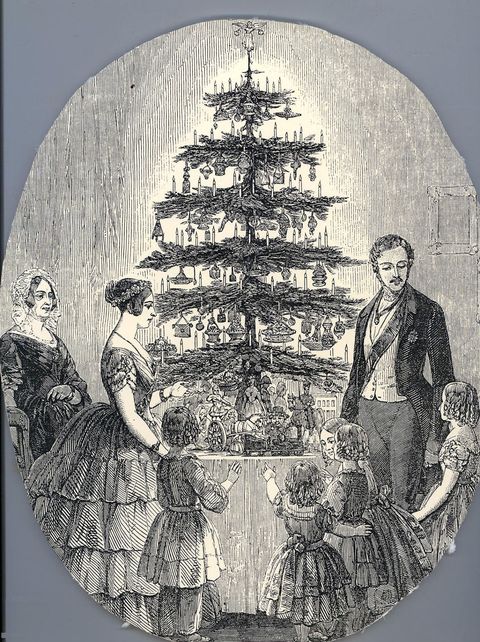
German immigrants to the United States of America brought the Christmas tree tradition with them.
The Vatican started installing a Christmas tree in 1982.
Debate has existed since the beginning of Christianity (as early as 2nd century AD) of whether or not to celebrate with distractions such as a Christmas tree or Paradise tree but the vast majority enjoyed adding some fun (decorations, symbols) to the celebrations.
Today the decorated Christmas tree continues to be a part of the overall celebration of the birth of our Savior Jesus Christ as well as a celebration of family. It is not idolatry, it is simply decoration, a symbol of Christmas spirit and fun.
What about "Santa Claus" (Saint Niclaus or Saint Nicholas in English)?
Saint Nicholas (270-343 AD), a bishop from Greek Myrna in modern day Turkey, was made famous because of his history of giving gifts to poor children, among other actions. The original feast day to celebrate Saint Nicholas was December 6. This melded into the overall Christmas celebration over time developing the tradition of gift giving. Christmas gifts were offered during the middle ages. Again the tradition appears to have been started by northern Europeans (Germany, Netherlands, Scandinavia) among the new Protestants and traditional Catholics.


No comments:
Post a Comment